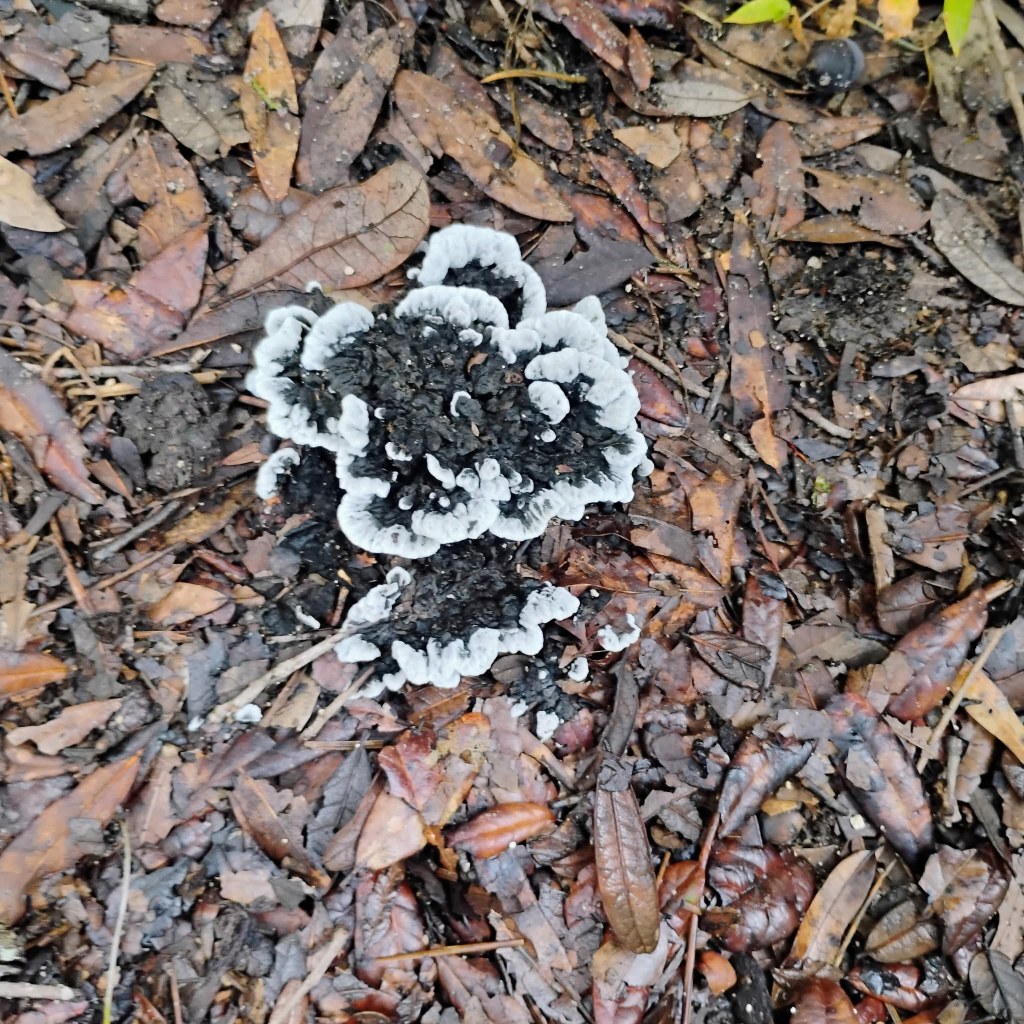
The Ocala National Forest is a treasure trove of natural wonders, and sometimes the most intriguing discoveries are right at your feet! On a recent hike, I stumbled upon these fascinating growths, and I had to share them. Meet Thelephora terrestris, more commonly known as the Earthfan or, less charitably, the “Ground Wart.”
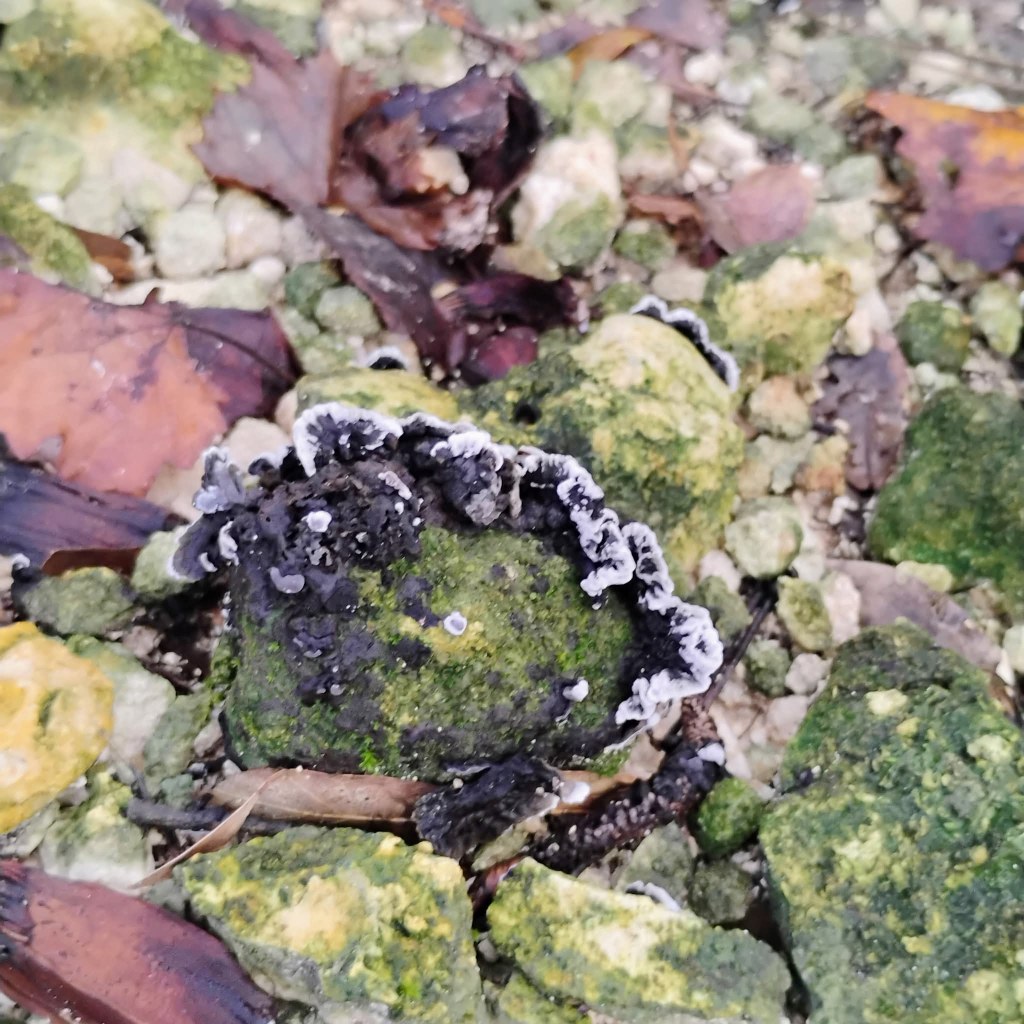
At first glance, you might mistake it for something burnt, a clump of hardened earth, or even a piece of old leather. But upon closer inspection, you see the intricate, wavy white edges contrasting with its dark, often debris-laden center. It grows in beautiful rosette or fan-like clusters directly on the forest floor, frequently incorporating pine needles and small stones into its sturdy structure.
Despite its unassuming appearance, the Earthfan is a superhero of the forest floor! It’s an ectomycorrhizal fungus, meaning it forms an incredible, mutually beneficial partnership with the roots of trees, particularly the pines that dominate the Ocala National Forest.Think of it as the tree’s personal nutrient delivery service. The fungus helps the tree absorb vital water and nutrients (like phosphorus and nitrogen) from the soil, which can be difficult for tree roots to access on their own. In return, the tree provides the fungus with sugars produced during photosynthesis. It’s a perfect example of nature’s teamwork!Echoes from the Past: Uses “In the Old Days”While you definitely wouldn’t want to put the leathery Earth fan on your dinner plate (it’s tough and not considered edible), fungi like this have had some fascinating historical uses:Natural Dyes: Before synthetic dyes, people turned to nature for color. Similar species of “leather fungi” were prized for creating beautiful, earthy dyes. Depending on the mordant (a substance used to fix the dye), they could yield everything from mossy greens to deep grays and even blues for fabrics and yarns. Imagine the pioneer women of Florida using forest finds to color their homespun!”Nursery Weed” No More: Early foresters actually considered the Earth fan a nuisance in tree nurseries because it would grow so readily in pots with pine seedlings. Little did they know, it was helping those young trees establish the vital root connections they’d need to thrive once planted in the wild.Smoldering Tinder: While not the primary choice, tough, leathery fungi were sometimes dried and used as “punk” or tinder. They could catch a spark and smolder slowly, making them useful for transporting fire or getting a campfire started in a more primitive way.So, the next time you’re exploring the Ocala National Forest, take a moment to look down. You might just spot the Earth fan, quietly working its magic, connecting with the trees, and holding a little piece of natural history in its dark, leathery lace. It’s a beautiful reminder that even the most unassuming parts of the forest have incredible stories to tell!


 Gentle Trails journal
Leave a comment